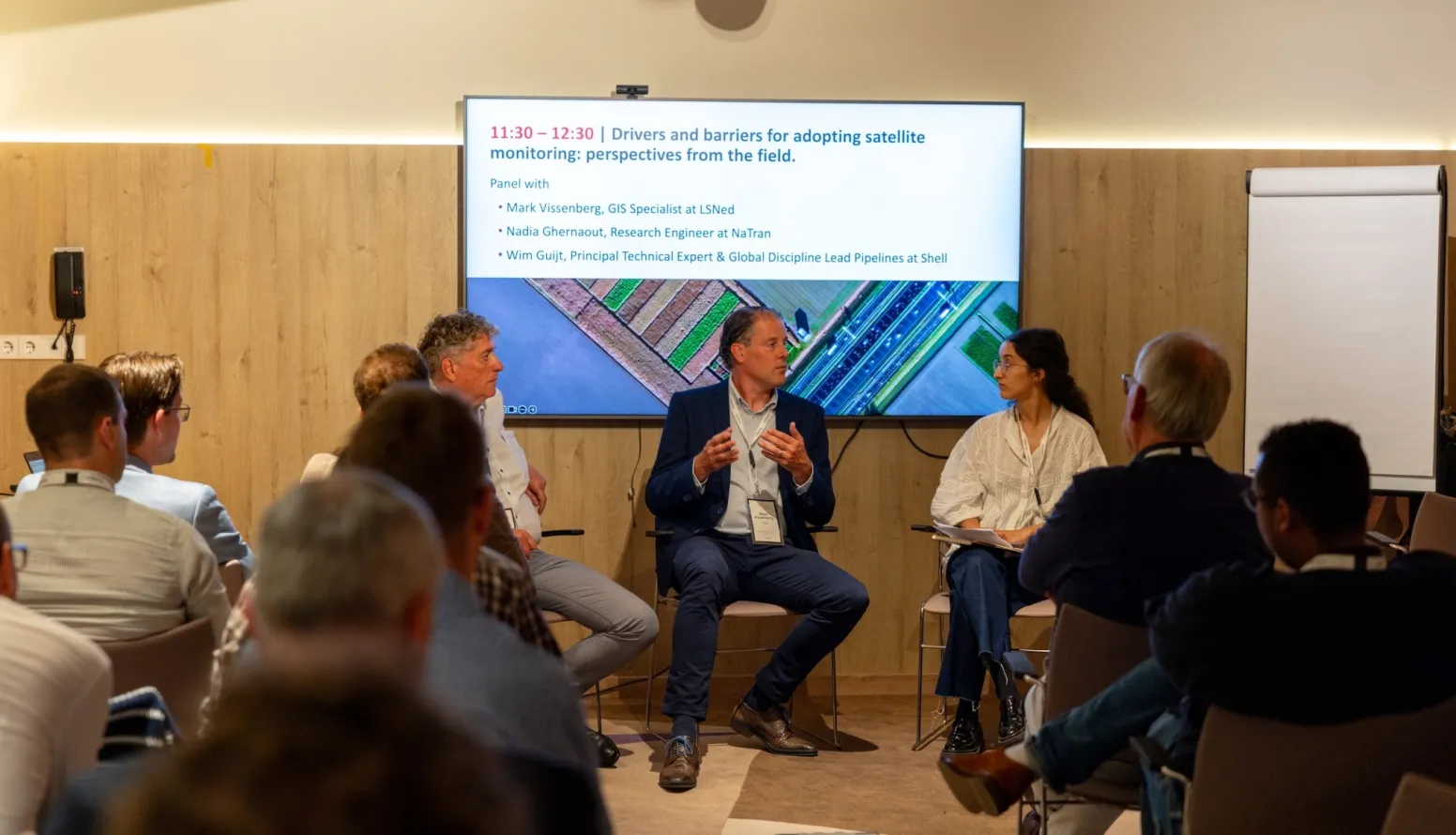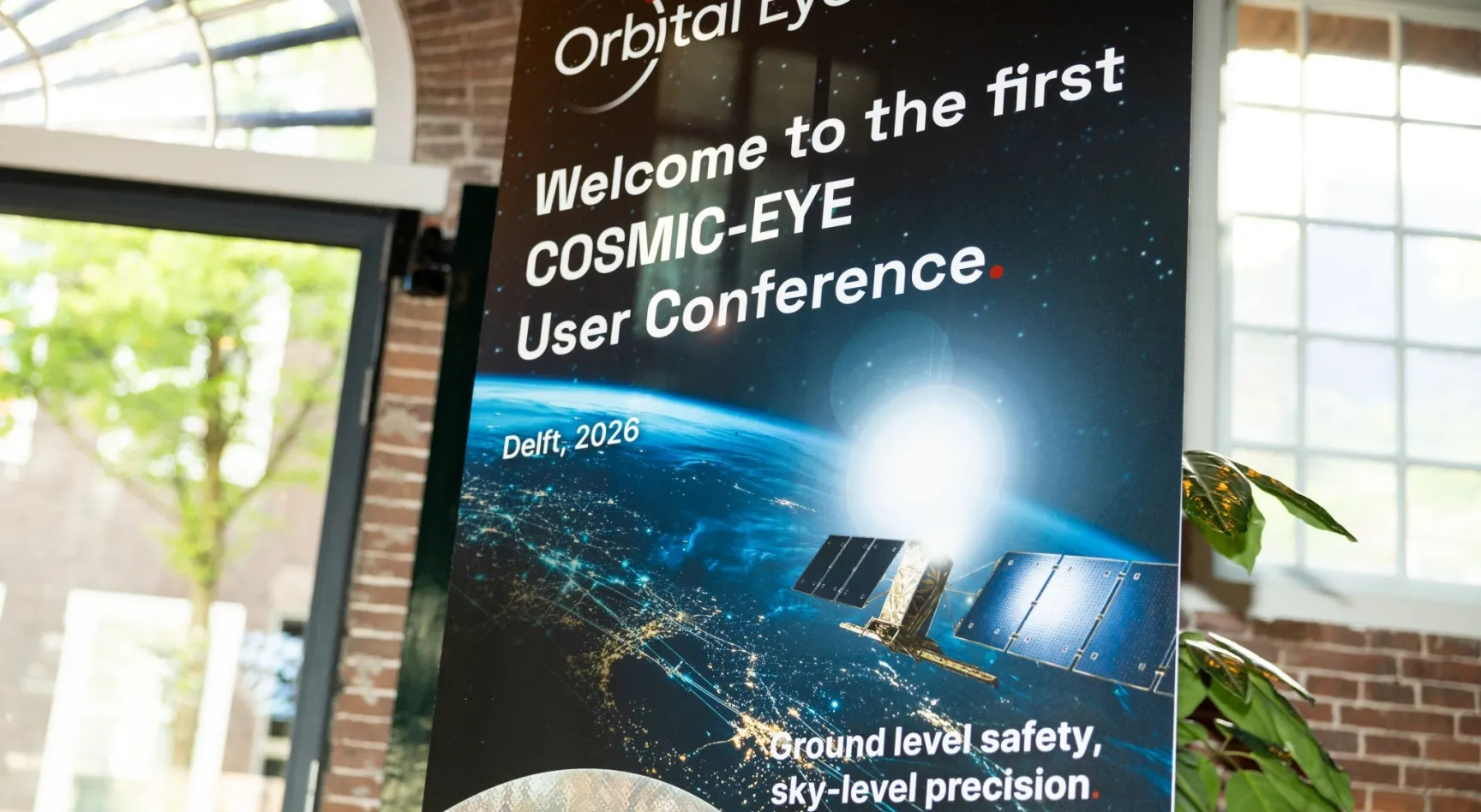
International infrastructure operators showed how satellite-powered monitoring is becoming the new operational standard for protecting critical infrastructure during the first Orbital Eye User Conference, held in Delft on 29 and 30 June.
More than 40 professionals from over 10 countries attended, including representatives from NaTran, RTE, LSNed, Gascade, Shell and Slovnaft. Together, they shared practical experience pointing to one clear conclusion: satellite-powered monitoring is moving fast from innovation programme to day-to-day operational practice.
From pilot to practice
Facing stricter safety and compliance requirements, growing efficiency demands and a more volatile geopolitical landscape, operators are rethinking how they monitor their assets. Rather than relying primarily on periodic helicopter patrols and field inspections, more organisations are turning to continuous satellite-powered monitoring for uninterrupted visibility across thousands of kilometres of infrastructure.
Recent deployments at Enagás in Spain, LSNed in the Netherlands and BHE GT&S in the United States show this shift has moved well past the pilot stage, with satellite-powered monitoring now built into daily operations to speed up decisions, catch risks earlier and cut inspection costs.
The business case has caught up with the technology
Advances in satellite availability, AI, cloud computing and multi-sensor data fusion have turned satellite-powered monitoring into a reliable, scalable and cost-effective capability that complements, and often partly replaces, traditional inspection methods. As one theme of the conference put it: the question is no longer whether it works, but how to integrate it as effectively as possible.
Two results underlined that point. During a six-month pilot, BHE GT&S found that satellite monitoring detected ten times more activity than helicopter patrols over the same period. NaTran reported a 90% reduction in GHG emissions and an 88% increase in efficiency since adoption.
More than 20 operators took part in sessions on implementation strategy, business value, change management and lessons learned from integrating satellite-powered monitoring into existing workflows. Aravind Ravichandran, Founder and CEO of TerraWatch Space, gave his view on the fast-evolving Earth Observation market, and further sessions covered non-standard applications, daily satellite overpasses, and geohazard monitoring, closing with a look at what's next for infrastructure monitoring.
Get the full press release here.