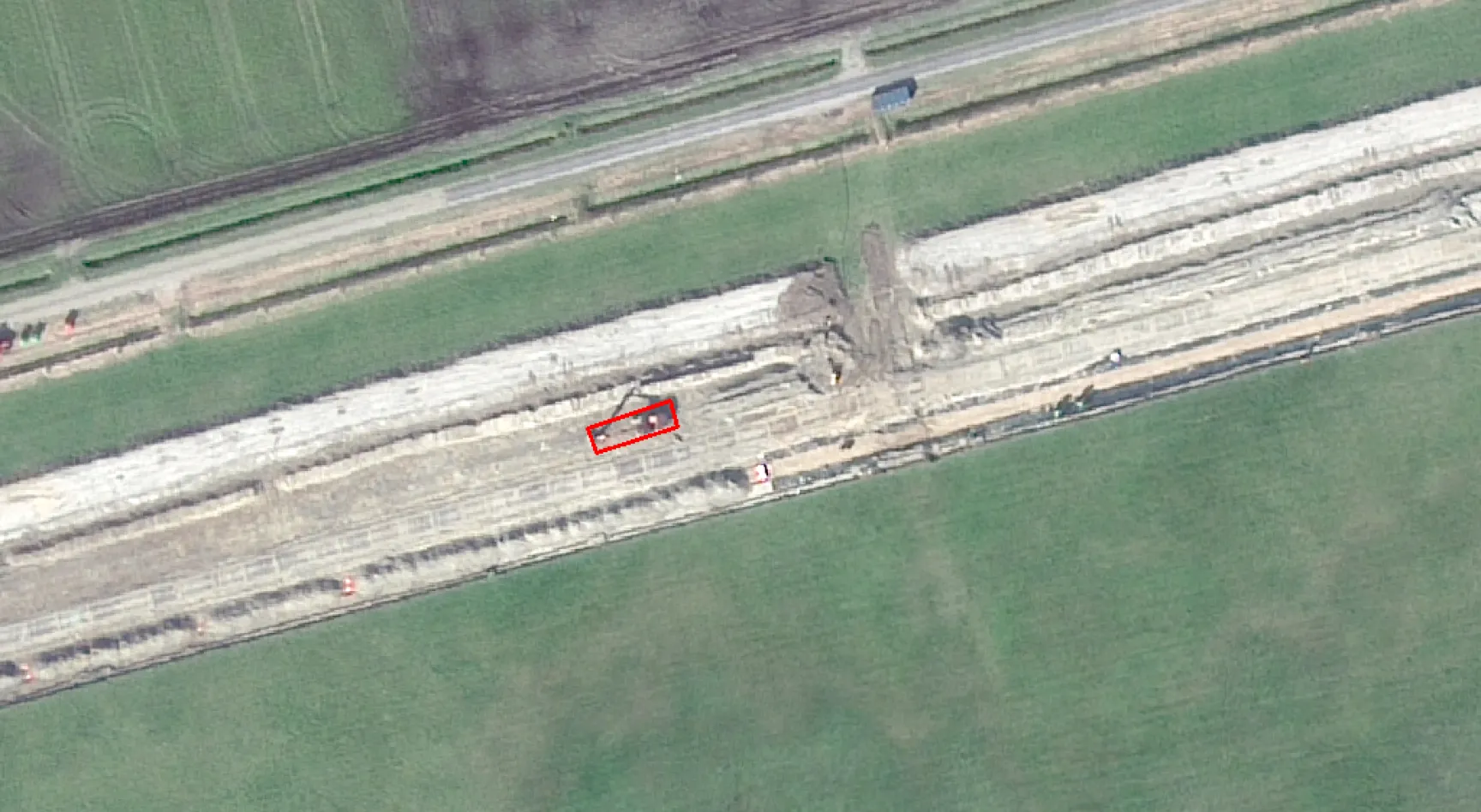
When you are responsible for one of the Netherlands’ most important underground infrastructure corridors, knowing what is happening above ground matters.
Excavation works. New construction. Temporary site installations. Heavy equipment appearing where it was not before. Activities like these can quickly create risks for the pipelines and cables running beneath the surface.
For years, LSNed relied on weekly helicopter patrols to monitor its pipeline corridor between Rotterdam and Antwerp but a corridor of this scale does not stand still between inspections. So, following a successful pilot with us, LSNed decided to make a fundamental change: replacing its routine helicopter patrols with satellite monitoring as part of its daily operational processes.
The result is a more continuous, scalable and sustainable way to monitor activity along the pipeline corridor, and act when something requires attention.
Protecting the Rotterdam–Antwerp Pipeline Corridor
Leidingenstraat Nederland (LSNed) is an independent organisation responsible for managing the pipeline corridor between Rotterdam and Antwerp.
The corridor contains approximately 1,400 kilometres of pipelines and around 5,000 kilometres of cables, making it an important part of the Dutch underground infrastructure network.
LSNed is responsible for ensuring the corridor can be used safely and without interruption. That means maintaining oversight not only of the infrastructure underground, but also of the activities taking place around it.
With thousands of kilometres of critical infrastructure to oversee, getting the right information at the right time is essential.
The Limits of Periodic Pipeline Inspections
Helicopter patrols provide a valuable overview of a pipeline corridor, but they only capture what is happening at a specific moment in time. Between inspections, new activities can emerge, from excavation works and construction to the arrival of heavy equipment or temporary site installations.
As infrastructure networks grow in scale and complexity, relying on periodic physical inspections alone can make it more difficult to maintain a consistent view of what is happening across the entire corridor.
Therefore, LSNed began exploring whether satellite monitoring could provide a more frequent and systematic view of activity across the entire pipeline corridor.
Together with Orbital Eye, the organisation tested COSMIC-EYE, our satellite-powered monitoring solution for critical infrastructure.
Following the successful pilot, LSNed chose to move beyond testing and integrate satellite monitoring into its regular operations.
“As an infrastructure management organisation, we continuously look for ways to improve our oversight,” says Ferdinand van den Oever, Director of LSNed. “Satellite monitoring enables us to gain faster insight into activities along the corridor and to act more effectively. At the same time, it offers a more sustainable approach to supervision, with less disruption to the surrounding environment.”
Turning Satellite Data Into Actionable Insights
Satellite monitoring is not simply about having more images. It is about knowing what has changed and which changes deserve attention.
COSMIC-EYE analyses radar, optical and multispectral satellite data using AI to identify potentially risk-increasing activities around pipelines and other underground infrastructure.
These can include:
- excavation works
- construction activity
- temporary site installations
- storage or movement of heavy equipment
Instead of asking teams to manually inspect large volumes of satellite imagery, COSMIC-EYE translates relevant changes on the ground into actionable insights that can be incorporated directly into operational workflows.
This gives LSNed a more consistent view across the corridor and helps its team focus attention where it is needed most.
From Weekly Patrols to Continuous Monitoring
For LSNed, the move to satellite monitoring marks a shift in how the corridor is monitored on a day-to-day basis. Instead of depending mainly on weekly helicopter inspections, the organisation can now build a more consistent picture of activities taking place along the route.
This continuous view helps LSNed identify potentially risk-increasing activities earlier, while reducing its dependence on inspections that are more affected by weather conditions, planning and operational resources.
For LSNed, the new approach provides:
- more continuous visibility across the pipeline corridor
- earlier detection of potentially risk-increasing activities
- less reliance on helicopter-based inspections
- a monitoring approach that can scale as infrastructure networks become larger and more complex
- a more sustainable way to maintain oversight with less disruption to the surrounding environment
Looking Ahead
The LSNed case demonstrates how satellite monitoring is moving beyond pilots and innovation projects into daily operations.
“This transition illustrates how satellite monitoring is moving beyond pilots and innovation projects into daily operations,” says Sven van Haver, CEO at Orbital Eye. “The LSNed case demonstrates that continuous, data-driven monitoring can effectively support infrastructure operators in managing risk across large and complex corridors.”
As infrastructure operators face increasing pressure to improve oversight while managing larger and more complex networks, continuous satellite monitoring offers a practical and future-ready way to strengthen operational control.
Bringing Satellite Monitoring Into Daily Operations
For many infrastructure operators, satellite monitoring has traditionally started as a pilot or innovation project. This case shows how that technology can move beyond the testing phase and become part of everyday operational processes.
By integrating satellite-powered insights into its regular monitoring activities, LSNed can use this information to support practical decisions about where further investigation may be needed and where attention should be focused along the corridor.
“The LSNed case demonstrates that continuous, data-driven monitoring can effectively support infrastructure operators in managing risk across large and complex corridors,” says Sven van Haver, CEO of Orbital Eye.
As pipeline and critical infrastructure networks continue to grow in scale and complexity, maintaining a consistent overview through physical inspections alone becomes more challenging.
Satellite monitoring can complement these existing processes by providing a broader and more continuous view of activity across large areas, helping operators turn observations into information they can use in their day-to-day work.
What Is Happening Along Your Infrastructure Right Now?
If your team still relies heavily on periodic patrols, manual inspections or fragmented data to monitor activity along a pipeline or infrastructure network, there may be a more scalable way to maintain oversight.
COSMIC-EYE helps infrastructure operators detect relevant activity across large areas and turn satellite observations into information their teams can act on.
Discover how COSMIC-EYE works →
Curious what satellite monitoring could look like for your network?
Arrange a call with our team and let’s explore it together.